



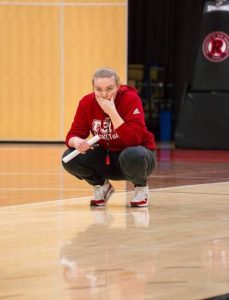
How many years of experience do you have in Basketball?
I started playing basketball around age five. I played through high school and briefly at Acadia before a knee injury ended my competitive playing career. I started coaching the very next year, in 2013, and I’ve been coaching ever since, about 13 years now.
How did you get into coaching / what was your coaching journey/pathway (team/club names welcome)?
I got into coaching in a bit of an unexpected way. I blew my knee out, stepped away from sport for about a year, and eventually realized how much I missed being part of it. I reached out to a former provincial team coach to see if I could help the following season, and she basically said, “What are you doing next weekend?” That was my start.
I skipped the usual youth coaching pathway and went straight into provincial teams in 2013, which threw me into a performance environment right away. Since then, I’ve coached provincial teams every summer. My coaching journey has taken me from New Brunswick to British Columbia for my master’s, then to Ontario for my first full‑time coaching role, including six years as a full-time assistant at the University of Windsor.
I’ve been lucky to work in some incredible environments including the University of British Columbia (UBC), which has multiple national titles, and Windsor, famous for winning five straight. Being part of those rebuild phases taught me a lot about culture, standards, and long-term development.
I moved home in 2023, right as Coach Erin took the job at UNB, and the timing lined up perfectly. I landed in Fredericton, and this is where I am now.
Have you faced any unique challenges that you think have helped your development as a coach?
My pathway has been anything but traditional. I always say my biggest flaw is that I’ve never coached a “normal” season. I went straight into provincial team environments as a head coach, and then into university and provincial teams as an assistant. Only now am I starting to coach youth basketball, so I’ve never really gone through the full grassroots cycle the way most coaches do.
I’ve supplemented my learning the best I can, but I do wish I’d had that early foundation where you can experiment, try things, and make mistakes without consequences. Jumping straight into high-performance environments affected my confidence at times, I often felt like I didn’t know what I was doing, and there wasn’t much room to just test things out.
That’s something I talk about a lot with mentees and mentors: put yourself in situations where you can try. Low-stakes reps matter. I didn’t get that early on, and it made my learning feel a bit disjointed. I feel much more grounded now, but it’s definitely been a unique pathway. Not many people start at the top and work backwards, but it has given me a unique perspective.
What does mentorship/the mentor program mean to you?
Mentorship is important to me on two levels: academically and personally. It’s been a research interest of mine for a long time, especially around supporting female coaches and helping young or inexperienced coaches build confidence. All the evidence shows how critical mentorship is — having someone to talk to, to bounce ideas off, and to learn from in a safe space makes a huge difference.
I’m really grateful for the mentors I had. The coach who first invited me into her space was a huge influence, and because I didn’t grow up with many female coaches, seeing women in those leadership roles was powerful. It showed me that coaching was something I could do. I wouldn’t be where I am without that support.
That’s why giving back matters so much to me. Whether someone is young, new to a space, or trying to take the next step and doesn’t know how, I want to be someone who can offer guidance and support. Even if I’m not coaching at a high level, I still want to be in these environments helping people reach their goals.
One of the most rewarding parts has been watching my own mentees grow. I have a mentee I coached, then brought into assistant roles with me, and now I’m watching her thrive and take the next steps in her coaching journey. Seeing that progression is incredibly meaningful.
What is your vision for sports/your sport in New Brunswick?
From a basketball standpoint, we’ve seen a lot of success at the university level this year, and what excites me most is how many New Brunswick athletes are now playing meaningful roles on those teams. We have plenty of athletes playing; I’d love to see more of them impacting championship‑level teams the way we saw this year.
At the youth level, I think things have gotten a little intense and standardized, and I’d love to see more investment in true development, more play, more joy, more opportunities for kids at all levels, not just those who make a specific team and follow a rigid pathway. I want to see more spaces where kids can simply play, have fun, and grow.
I also look at clubs in other sports, even here in the city, that invest heavily in mentorship and coach development, and I’d love to see more of that in basketball. Some European club models do this incredibly well, a bottom‑to‑top approach where coaches, athletes, and programming are all connected. It’s not realistic everywhere, but the principal matters: invest in people.
At the end of the day, athletes stay in sport when they enjoy it. My big vision is a basketball community in New Brunswick that prioritizes development, joy, and meaningful roles for our athletes and invests in the people who make that possible.
Describe your coaching style in 1 word?
My coaching philosophy is fundamentally people‑first. Even in a competitive university environment, my athletes are people and students before they’re players. What drives me is seeing their growth over their four or five years with us, on the court, in the classroom, and as humans.
Basketball is just the vehicle. My focus is empowering athletes to understand the why, ask questions, and advocate for themselves. If I had to sum it up, I’m a person‑focused coach.